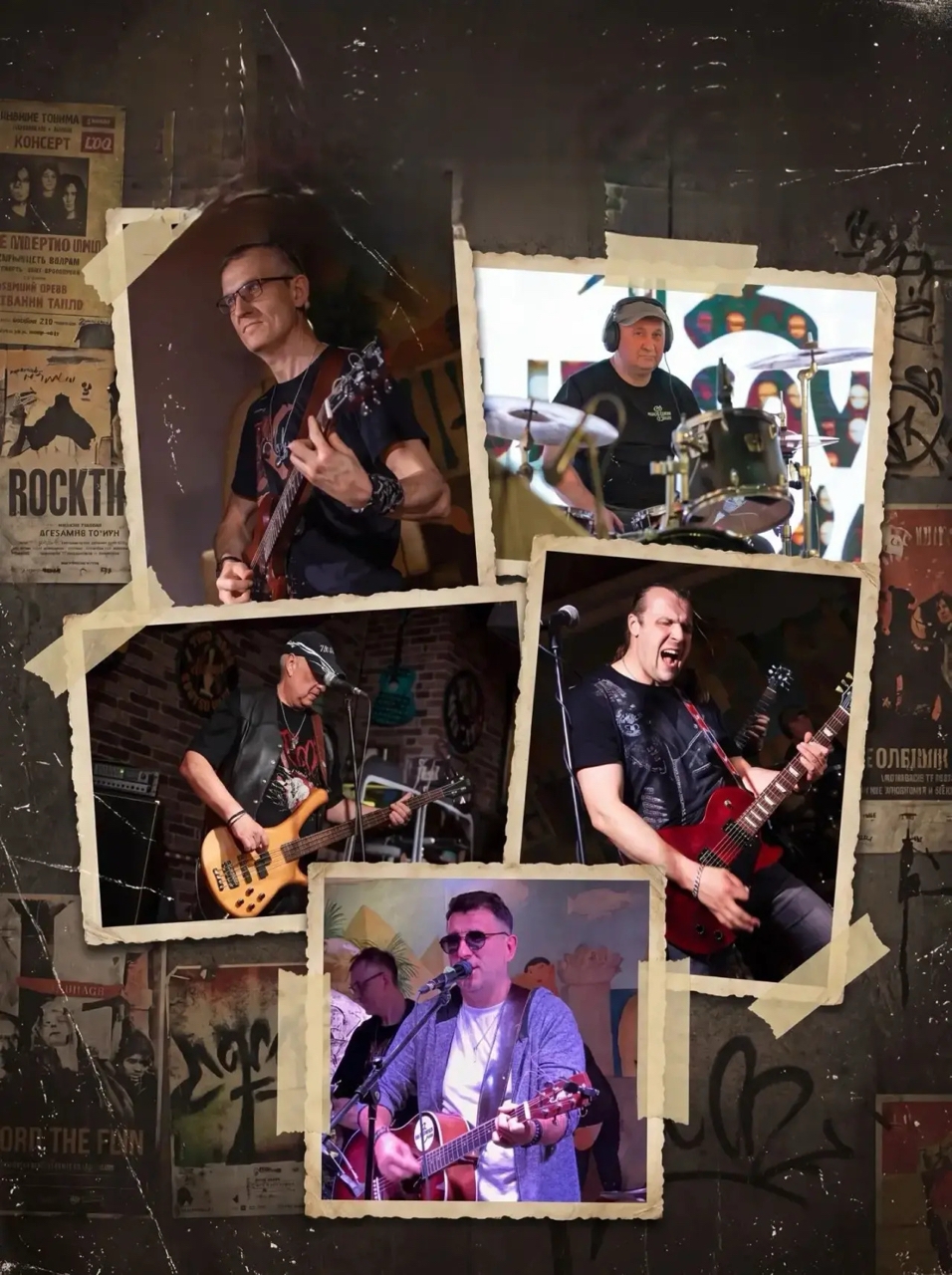
Executor Petrovich Zolotar

- Added by: 05 September 2026
- Author: Sergey Lyamin
-
To bookmarks
Petrovich Zolotar is a performer for whom music has become a way to tell stories about life as it really is - with its hardships, humor, roads, ordinary people, and moments worth preserving in song.
Before beginning his musical journey, Petrovich worked as a sewage truck operator. He speaks about that period of his life with his characteristic self-irony and humor: “I know where the bottom is and how to deal with it.” It was during that time that music gradually began to take up more and more space in his life. To make the working hours pass faster, he would sing to himself, and people around him increasingly began asking him to sing more.
What started as a simple pastime gradually grew into something much bigger.
Chanson as the Music of Real Life
Petrovich chose chanson as his main musical direction. For him, this genre is first and foremost about life without embellishment - stories about hardship, emotion, people, the road, love, and the ability to keep moving forward no matter the circumstances.
His sound is not limited to traditional chanson. Petrovich is also drawn to folk elements, balalaika, accordion, expressive shouts, and even whistling - anything that can give a song more energy and a stronger sense of character.
Among the artists and projects that influenced his musical tastes, Petrovich names Misha Sha (Sheleg), Zhdamir Vladimirov, and the band “Butylka.” He also finds inspiration in old courtyard songs, appreciating their sincerity and the way they reflect real life without studio polish or autotune.
Petrovich describes his own music in three words: strong, honest, and soulful.
For him, music has long since stopped being just a hobby. It is a way of life: even when he is not actively working on a song, new lines, ideas, and possible choruses continue appearing in his head.
How Petrovich’s Songs Are Born
Most often, a new song begins with an idea. Inspiration can come from an ordinary moment - a road, a random situation, or a scene noticed during a trip. First comes a line, then a melody, and gradually the chorus begins to take shape.
Sometimes the process works the other way around: the music “speaks” first - for example, the sound of an accordion - and Petrovich then builds a story around it.
A large part of his material has real-life roots. Many stories are based on his own experiences, although they may be slightly embellished for the sake of the song. For Petrovich, it is important to preserve a recognizable connection to real life while still leaving room for humor and artistic imagination.
Even the story about the “sacred ZIL truck,” according to the artist, is almost documentary in nature. Themes of roads, people, and relationships make up the more lyrical side of his work.
Petrovich can work on music almost anywhere. Ideas come to him on the road, drafts are written at home, and the final details are refined in the studio. If inspiration strikes while he is driving, he can simply record a voice note and later turn it into the foundation of a new song.
Creating a single song can take anywhere from a few days to several months. Some compositions come together almost on their own and can be finished in three days. Others require much more time.
Petrovich compares those difficult moments to a ZIL truck stuck in the mud: the wheels are turning, the engine is roaring, but it is not going anywhere.
From an Idea to an Official Release
Petrovich considers the hardest part not writing a song, but bringing it all the way to an official release.
If creating a song is like planning a route, then releasing it is the actual journey. There are approvals to deal with, licensing issues, copyright matters, preparation of the final material, and the challenge of making sure the track still sounds the way it was intended after being published on streaming platforms.
Special attention has to be paid to copyright when using parodies, references, and samples.
Another part of the musical journey is the audience reaction. Some listeners connect with Petrovich’s work, while others consider it “not their format.” He takes that calmly: everyone has different musical tastes.
The Moment Music Became Serious
One especially important moment for Petrovich came when he heard one of his own songs on the radio for the first time.
That was when he realized his music no longer existed only for himself - complete strangers were hearing it too.
Later, comments started appearing from listeners who recognized themselves and their own life experiences in his lyrics. For Petrovich, that became further proof that music is capable of finding the person who needs it.
Hearing his music on the radio still gives him a special feeling.
Petrovich compares it to your ZIL suddenly pulling onto the country’s main highway: there is excitement, pride, and the thought that somewhere at that very moment, someone may be listening and feeling just a little better because of the song.
“Zhivu Nastoyashchim”
A special place in Petrovich’s work belongs to the song “Zhivu Nastoyashchim” (“Living in the Present”).
According to the artist, the song reflects his personal philosophy: not to live in constant regret about the past, but to value the present and keep moving forward.
The song contains many details from his own life, so performing it brings certain memories back each time. But it is not a song about sadness - it is more about respect for the road already traveled.
Petrovich calls “Zhivu Nastoyashchim” one of those songs he can listen to again and again, finding something new in it each time.
Among other artists, he particularly values the songs of Mikhail Krug, appreciating their realism and their ability to retain emotional power over time.
The Listener as Part of the Creative Journey
Feedback means a great deal to Petrovich. He sees comments, reactions, likes, and constructive criticism as a kind of navigation system.
Sometimes a single phrase from a listener can make him see a song from a different angle and help him refine it until it becomes much stronger.
The main message Petrovich wants to communicate through his music is simple: life is different for everyone. It can be difficult or funny, joyful or painful, but there are always stories worth telling.
His former profession has also become part of this philosophy. In Petrovich’s view, it does not matter what a person does for a living or what place they hold in society: everyone has a story that deserves to be heard.
New Songs and Experiments
Petrovich is currently working on a new collection. In it, he plans to combine lyrics, humor, and a touch of his characteristic absurdity.
Collaborations with other musicians are also in preparation. Petrovich wants to make his sound more diverse while preserving chanson as its foundation.
In the future, he plans to experiment more actively with genres. His music may incorporate elements of folk, polka, cabaret, and other styles capable of adding more energy and emotion.
At the same time, Petrovich has no intention of abandoning chanson entirely. The experiments are meant to expand his sound, not strip it of its identity.
There are also ideas for a music video: a road story with the atmosphere of an old highway and authentic live-action footage.
Studio, Stage, and Morning Inspiration
Petrovich does not want to choose between the studio and the stage.
For him, a song is born in the studio and comes alive on stage. Studio work makes it possible to carefully refine every detail, while live performance gives him the chance to see the audience’s reaction directly.
Petrovich considers morning his most productive time for creativity. He especially enjoys the moment when the city is only beginning to wake up and he already has a guitar or accordion nearby.
But inspiration does not follow a strict schedule. If a new idea comes at night, he is perfectly willing to keep writing until sunrise.
Petrovich sees the modern music industry as both an inspiration and a challenge. New technologies and genre blending create enormous creative possibilities, but among all that variety, it is especially important to preserve your own voice and character.
A Message to the Listeners
Petrovich Zolotar says to his audience:
“Thank you for listening. Every reaction from you is like a green light on the road for me. Keep living, enjoying life, feeling sad when you need to - and know that somewhere out there, Petrovich is singing for you, just to make things feel a little warmer.”
Petrovich Zolotar Online
Follow the latest news, listen to his music, and support the artist on VK.
Petrovich Zolotar’s page:
https://vk.ru/petrovich_gold_shit
Artist page / music:
https://vk.ru/artist/petrovichzolotar